We accept
Medicare Advantage plans to fit your dental needs.
Medicare Advantage plans to fit your dental needs.

Dental appointments have the reputation for being unpleasant, whether the reputation is justified or not, and some people have a phobia about the dentist's chair. The term is odontophobia and it's very common. Many times, however, it's more about fear of the unknown than the actual procedure.
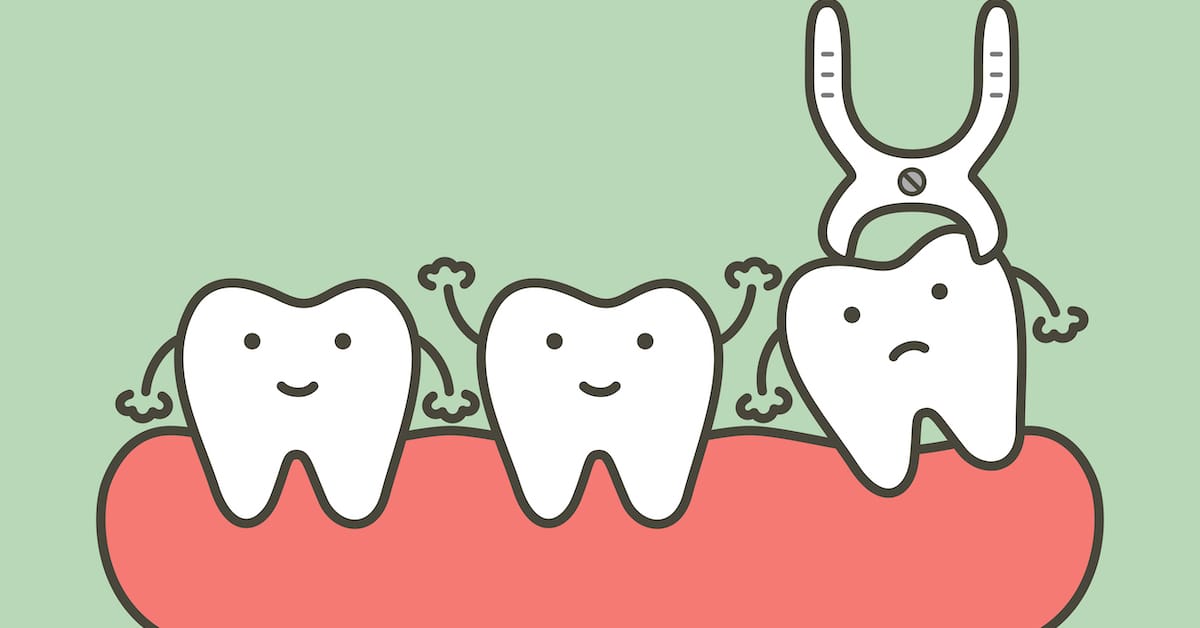
Tooth extractions are particularly notorious for inspiring odontophobia, especially among adults. Children often see the loss of a tooth as a rite of passage and they often get a reward for it. For adults, it’s a bit different. An extraction procedure with your Denville dentist doesn't need to inspire trepidation when you know why the extraction is necessary, what to expect, how to prepare, and the recovery procedure.
When one or more teeth are loose, damaged, or broken, you may need an extraction to maintain good oral health. When there's a crack in the enamel, bacteria can enter and start the process of decay. If you're unaware of the decay, it can become an abscess, which can become a serious health condition.
The first step in your tooth extraction will be an x-ray. This will enable your dentist to determine the best method for removing the tooth. Your dentist will discuss your options for sedation as well as your medical history. If you have health issues such as a cold, congestion, nausea, or vomiting, you should inform your dentist without delay, since this can affect the procedure and the outcome.
During your initial consultation with your dentist, be sure to advise them if any of the following apply to you:
There are two types of extractions: simple and surgical. A simple extraction removes a tooth that can be seen above the gumline, and involves loosening it and removing it. A surgical extraction is used for a tooth that's below the gum and your dentist will make a small incision in the gum so the tooth can be removed. The incision may be closed with a few self-dissolving stitches.
Your dentist will use a local anesthetic for both procedures and an intravenous anesthesia may be required for some types of surgeries. Notify your dentist if you feel any pain or pinching.
After your procedure, the site will be packed with gauze and you'll need to bite down to help stop the bleeding. When you get home, you'll need to adhere to the following guidelines:
Some residual bleeding, swelling, and pain are normal after you have a tooth extraction, but they should be minimal. Call your dentist if you experience any of the following:
If you experience uncontrolled bleeding, chills, fever, excessive pain, difficulty in swallowing, or severe swelling, be sure to contact your Denville dentist without delay.
For the first few days, eat only soft and cold foods until your mouth heals. Avoid smoking, spitting, or drinking through a straw since these activities could dislodge your blood clot and start the bleeding process again. It could also cause other complications.
Usually, the extraction site will heal within one or two weeks and after that, you can resume your normal lifestyle and activities.
Wisdom teeth are the final set of molars to appear at the back of the jaw and sometimes there's not enough room for them without crowding the other teeth. Wisdom tooth extraction is common as a standard practice among dentists but not all agree that it's necessary. When considering a wisdom tooth extraction, your dentist will consider the risks and benefits of your unique situation as well as the impact on your life.
Often, wisdom teeth fit straight and comfortably in the mouth without crowding the other teeth. However, sometimes they never fully erupt, they crowd the other teeth, or they emerge crooked. When any of these happen, wisdom tooth removal is often recommended.
If your dentist has recommended wisdom teeth removal as a preventive measure, then it may be prudent to obtain a second opinion. Make sure you have the advice of a trusted and affordable Denville dentist so that you have the best long-term oral health. The American Dental Association recommends wisdom tooth extraction for the following reasons:
Although your wisdom teeth may not be causing problems currently, you should understand the reasons why a wisdom tooth extraction may be necessary. Those reasons include:
Your dentist may recommend against wisdom teeth removal if they're not causing a problem. Some don't believe that the benefits of removal justify the expense and inherent risks of the procedure. Ask your Denville dentist for their recommendations about the pros and cons so that you can make an informed decision on the procedure.